
Welcome to the Quantum Community Care Qld BlogSpot!
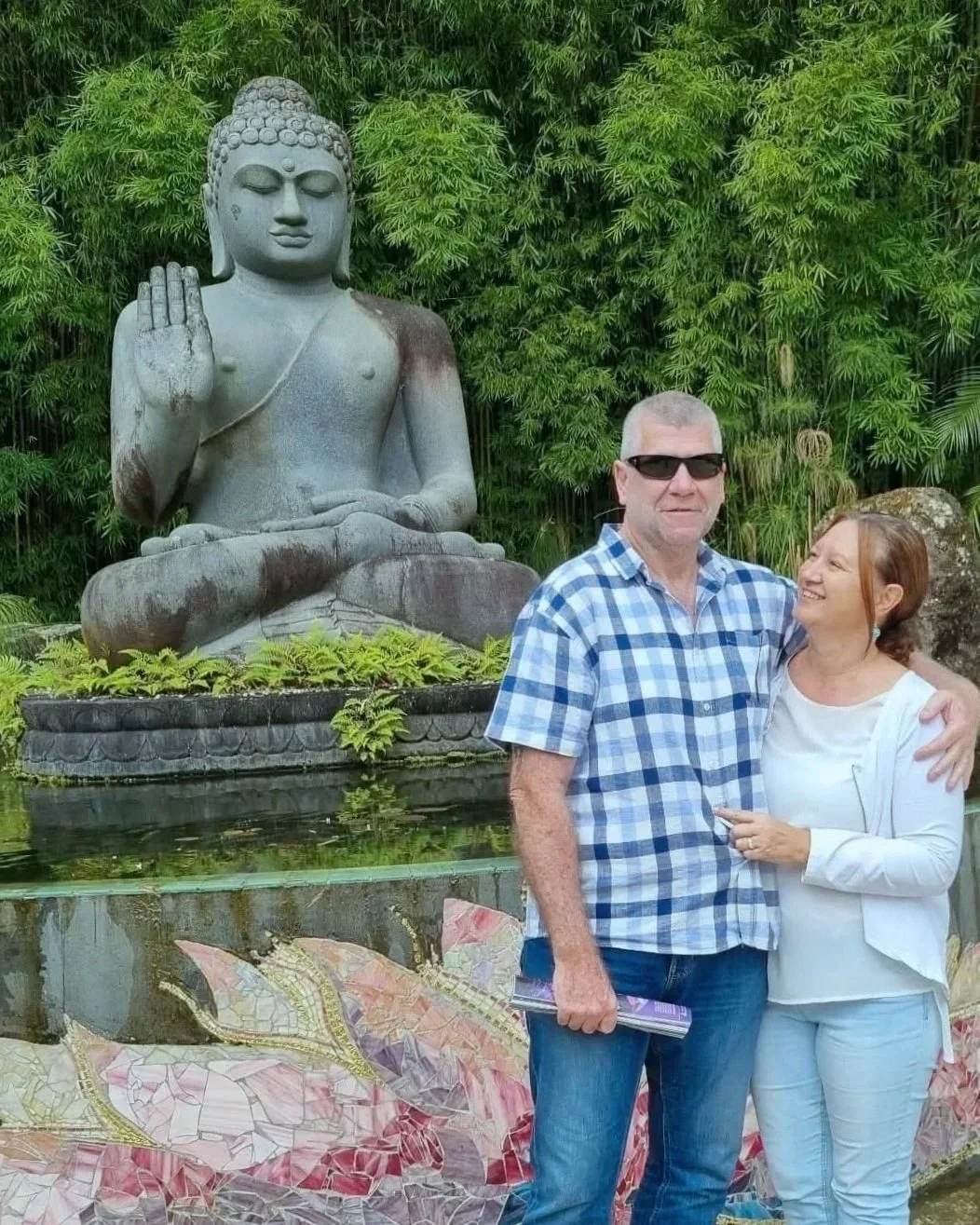
Our first post introduces our Founding Director, Christina, pictured with her husband Jeremy.
In 2016, Christina acquired what she calls the triple crown of brain injuries, resulting in a discreet physical disability and post-traumatic stress disorder. Christina survived blunt force trauma to her temporal parietal lobe, a ruptured aneurysm that caused a severe brain bleed in one event and then a stroke not long after. Despite these challenges, including two lower spine discectomy surgeries and recurring seizures, these experiences have shaped her perspective into being able to use her lived experience to provide support to other people living with a disability.
Christina founded Quantum Community Care Qld after facing difficulties while managing her symptoms in traditional employment. Her journey and understanding of psychosocial disabilities motivated her to create an organization that supports and advocates for others with similar challenges.
Her daily experience with disability gives her a unique insight into its effects. She navigates these challenges with remarkable resilience.
In addition to her lived-living experience, Christina uses her qualifications and 12 years of previous work experience in Aged Care and Disability Services settings to guide her in providing a quality service. Christina also has experience in providing advocacy support to others in the community.
Christina believes everyone deserves to thrive and reach their full potential. She is dedicated to providing the support needed to achieve this. Her goal is to empower people living with a disability to make their own choices, pursue their aspirations, and live their best lives.

10/10/2025.
A couple of days ago, I heard something I'd never heard before, and it was a profound moment for me. I was watching a video on Facebook when a speaker said, "a person's disability is only one part of that person."
Hearing that simple phrase was a powerful reminder that my disability doesn't define me. I am so much more than the disability I live with.
The 1 in 5: A New Beginning
The 19th of October, 2016, began as an ordinary day. But in a single heartbeat, the world went black.
I remember the sensation of fainting, falling from my dining chair, and the sickening thud of my head hitting the floor tiles. The blunt force of that impact did something catastrophic: it caused an aneurysm to form in my posterior communicating artery and instantly rupture. Blood flooded the subarachnoid space of my brain, surging into my frontal, temporal, and parietal lobes.
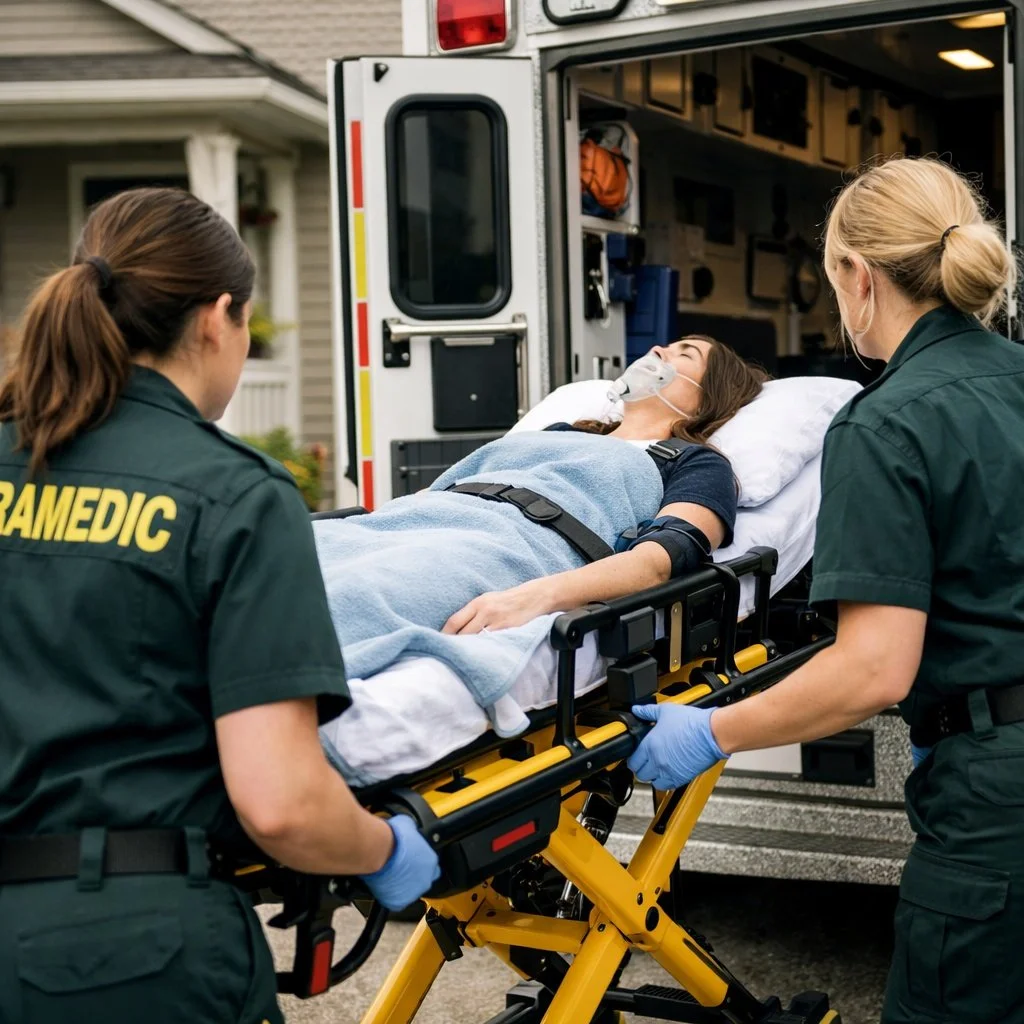
The first time I regained consciousness, the pain wasn’t just a headache; it was a "thunderclap"—a sensation like my skull was physically splitting apart. In a haze of survival instinct, I found my phone, hit a random contact, and told a colleague to call an ambulance. I remember trying to crawl to the front door while crying and praying to survive for my families sake. Somehow I managed to make it to the front door and unlock it for the paramedics before collapsing a second time.
The Power of an Informed Advocate
When the paramedics arrived, they saw a woman in pain but with "normal" vital signs. They concluded it was a severe migraine and suggested paracetamol and bed rest.
“Normal” is relative. My friend and colleague intervened. She knew my baseline blood pressure was naturally low and I had already been under going tests through Logan Hospital outpatients. To the paramedics, my reading was average; to her, she knew it was dangerously high. Because she challenged the professionals and insisted on my behalf, I was transported to Logan Hospital. Without her voice, I might never have woken up. A CT was performed and I was emergency transported to Princess Alexandra Hospital in Brisbane. My daughter was advised by the Doctors in Emergency that because of the extent of the bleed that I might not recover and to call anyone who wanted to see me (in case I passed).
The Void and the Reawakening
The next few days I lay unconscious in the hospital. Friends told me I would become conscious long enough to ask them to take care of my family and then drift back into unconsciousness again. At some stage a cerebral angiogram was performed to coil the ruptured aneurysm. While I lay in a "void," my support system became a single, coordinated unit.
Family members flew in from interstate and overseas, and friends helped by transporting them from airports to the hospital, and they even were kind enough to cook for my family so they were able to concentrate on my wellbeing. My friends were also helpful in holding a perimeter of positivity for my family and each other.
The only thing I remember during this time was a very peaceful feeling - I would come to learn later that this is what is explained as a near death experience. I hadnt died but I was very near to death.
I am grateful my will to live won.
I learned that informal support systems are an important necessity, not just to myself but as support to my family. Statistics say only 1 in 5 survive an aneurysm rupture. I am the one 5 in part because of the hands that held mine and the minds that advocated for me at different times when I was unable to speak for myself.
Special mention to my daughter especially, for what she had to go through - You are amazing Shaquille! I love you very much xo

The Physical Recalibration
Recovery was not a straight line. While in the recovery ward I suffered a vasospasm — the brain’s way of reacting to the trauma by narrowing the arteries. I remember the terrifying moment a nurse asked me to walk to the shower and I simply didn't know what "walk" or "shower" meant. When I got to the shower I experienced a vasospasm and spent many days in ICU after this. I had another vasospasm while in ICU but i pulled through and was returned to the neurology ward for recovery.
The brain needs time to physically recalibrate. Routine became my medicine. The repetitive tasks of waking, eating, medication and bathing weren't just chores; they were the sparks needed to re-ignite neural pathways in the basal ganglia. I became an active participant in my own care, researching medical literature from my hospital bed in between tests scans and observations. When a medication made me feel uncharacteristically aggressive, I didn't just accept it—I researched the side effects, presented them to my doctor, and requested a change. If you’re able to a person must be active in their own care.
The Invisible Struggle
When I finally left the hospital 21 days later, I thought I was "home free." But as we drove onto the motorway, the world tilted. I felt a crushing anxiety that we were about to crash—a symptom called visually induced dizziness. This was the start of a long list of "invisible" symptoms of my new found disability. On the surface, I looked healed. Inside, I was navigating a landscape of extreme fatigue and cognitive fog. I had to learn that recovery isn't just about the physical scars fading; it’s about reclaiming your emotions and your place in a social world.
The Invisible Marathon: Two Years in the Fog
Returning home was supposed to be the finish line. Instead, it was the start of a confusing and isolating marathon. On the outside, I looked like the same person, but inside, my world had been dismantled.
The first attempt at a "normal" dinner ended with burnt pots and a call to Domino’s. I discovered that the complex timing required to cook a meal—something I’d done a thousand times—was now a cognitive mountain I couldn't climb. Noise became painful. Any type of stress became a physical wall that caused my brain to simply "shut down."
Perhaps the hardest part was the well-meaning chorus of people telling me how "lucky" I was to be alive. To them, survival was the end of the story. To me, being "lucky" felt like being trapped inside a life I no longer recognized, battling short-term memory loss and a profound sense of isolation from other symptoms I was experiencing at the time but could not explain.
The Workplace: From Sanctuary to Battlefield
Twelve weeks after the injury—far too soon, in hindsight—I returned to work. Sitting at my desk, I stared at my computer, not knowing how to turn it on. Just like the shower in the hospital, my memory only returned once I touched the buttons.
While work initially felt like a saving grace, a change in management turned my sanctuary into a source of trauma. I was met with disability discrimination and workplace bullying.

The Mirror and the Ghost: Navigating Relationships
One of the hardest parts of those first few years wasn't the physical pain—it was the social "echo." I was constantly haunted by the memory of who I was before the injury. That "previous version" who was fit and healthy made it incredibly difficult to navigate my current life with family and friends.
I was caught in a painful contradiction: I was doing my absolute best to prevent my injury from impacting the people I loved, yet I could feel them "walking on eggshells" around me and see the looks of sympathy (or maybe at times pity) in their eyes. The more I tried to act normal, the more the strain grew.
I didnt even know what my normal was anymore.
The Strain of the Unknown
It wasn't just my struggle; it was theirs, too. Relationships are built on predictability and shared understanding, but a brain injury changes the rules.
A brain injury is a "family injury." Often, the person (if aware) that has survived the initial hurdle is grieving their old self, while their loved ones are grieving the person they used to know. Without professional support or TBI-specific counselling, this double-grief often leads to a breakdown in communication.
When Understanding Runs Out
Inevitably, the pressures of life—the moves, the work stress, and the cognitive fatigue—took their toll. Some of my relationships simply could not survive the transition. These endings did not happen because of a lack of love, but because of a profound lack of understanding on both sides. I could not always explain what was happening in my head, and they couldn't always see the "invisible" hurdles I was jumping every day.
The Downward Spiral
In just 2 years, the fallout of the injury touched every corner of my life:
Career: Two job changes, both ending in discrimination.
Stability: Seven moves, teetering on the edge of homelessness.
Relationships: The end of a long-term partnership. Inability to maintain some friendships.
Mental Health: A diagnosis of PTSD and a relapse into profound psychological distress.
How to Support a TBI Survivor
If you are caring for someone in the wake of an aquired / traumatic brain injury similar to mine, remember these principles to help them find their "New Beginning":
Be the Voice: If a medical professional dismisses a symptom that you know is abnormal for the patient, challenge it.
Secure the Environment: Reduce noise and dim the lights. A TBI brain is easily overstimulated.
Respect the Routine: Meals and medication at the same time every day help the brain regain autonomy.
Communication is Key: Use short, clear sentences. Give the person time to answer—never finish their sentences for them.
Manage the Crowd: Keep visitors to a minimum. Too many faces can cause confusion and "lights on, nobody home" moments.
Forgive the Personality: If the survivor uses language they wouldn't normally use or becomes agitated, do not chastise them. It is the injury speaking, not the person.
The Emergency & Medical Phase
Identify the "Thunderclap": A headache that feels like a "10/10" or "splitting apart" is a medical emergency. Never "wait and see."
Know the Baseline: Paramedics and ER staff use "normal ranges," but an advocate must speak up if those readings are abnormal for that specific person (e.g., blood pressure).
Patience for "Recalibration": The brain needs time to physically reconnect. Confusion about simple tasks (like how to shower or who a friend is) is a normal part of early recovery.
Be a Partner in Pharmacy: Medications are life-saving but can have profound side effects like aggression or mood swings. Always research side effects and have open discussions with specialists to find the right fit.
The Workplace & Professional Phase
The "Too Soon" Trap: Returning to work within the first few months is often driven by a desire for normalcy, but it can trigger relapses or other serious symptoms.
Phased Returns are Vital: Survivors need a gradual re-entry into work with adjusted expectations and reduced sensory/stress loads.
Identify "Invisible" Disability: Stress isn't just an emotion for a TBI survivor; it is a neurological trigger. Workplace bullying or discrimination is a direct threat to a survivor’s physical and mental health.
The Social & Relational Phase
Stop the "Eggshell" Culture: Constant tiptoeing creates anxiety. Open, calm, and direct communication is better than silent tension.
Validate the Struggle, Not Just the Survival: Avoid telling survivors they are "lucky" or should be "grateful." It can inadvertently dismiss the very real pain and loss they are experiencing daily.
Release the "Pre-Injury" Ghost: Comparing the current person to who they were before the injury creates a cycle of grief. Recovery starts when everyone accepts the person as they are now.
Address "Compassion Fatigue": Friends and family need their own support systems. If the support network burns out, the survivor loses their foundation.
Daily Life & Cognitive Management
Routine is Medicine: Repetitive tasks (eating, bathing, waking at the same time) help the brain rebuild autonomous neural pathways.
Manage the "Battery": Cognitive fatigue is extreme. A survivor may "shut down" or appear vacant—this is usually a sign of overstimulation or a drained "brain battery," not a lack of interest.
Respect Sensory Limits: Noise, bright lights, and crowds can be physically painful and cognitively overwhelming.
Recognize Visual Triggers: Symptoms like "visually induced dizziness" (common in cars or busy environments) are real spatial perception errors, not just "anxiety."
Chronic Fatigue: Is a very real symptom to anyone with a brain injury because the brain does not operate at the physical capacity it was able to prior to the injury.
The Systemic & Long-Term Phase
The Marathon Mindset: Recovery doesn't end when you leave the hospital. The first two years are a high-risk zone for housing, job, and relationship instability. Recovery takes time and doesnt end even when the person is well. Maintaining that recovery is just as important as recovering.
Integrated Mental Health: Brain injuries are traumatic events. Specialized trauma-informed therapy (for PTSD/C-PTSD) should be part of the standard rehabilitation plan.
Informal Support is Critical: Groups of friends and extended family who coordinate the "basics" (meals, cleaning, shopping) allow the survivor and their immediate family to focus entirely on healing.
ABOVE ALL - Remember that a person with a brain injury can struggle with the simplest tasks and how to intergrate into every day life. Their neural pathways are different to those that do not have a brain injury- no matter how well they look. While a person with a brain injury may recover they are still vulnerable to relapse.